
HeatShield Flue Liner Replacement: The Los Angeles Owner’s Guide
HeatShield flue liner replacement in Los Angeles typically runs $1,800 to $3,400 installed, depending on liner diameter, flue height, and whether the surrounding masonry needs repair. We stock HeatShield-compatible cerfractory flue liner replacement materials on our trucks and can usually complete the job same-day for standard sizing. Most Los Angeles homeowners discover the problem during a Level-2 camera inspection, when the sweep shows them cracked tiles, spalling mortar joints, or gaps between flue sections that let combustion gases leak into the chimney cavity.
Which HeatShield Models This Applies To
HeatShield’s cerfractory flue liner system comes in two main formulations for residential chimneys: the original HeatShield Cerfractory Flue Sealant, used for resurfacing and joint repair, and the HeatShield Sleeve system, a standalone liner replacement for clay flues that have failed beyond patching. The sleeve installs inside the existing flue and is rated for solid fuel, gas, and oil appliances. To identify what you have, look for the HeatShield stamp on the top flue tile or check your last inspection report for liner diameter, usually 6″, 7″, or 8″ for Los Angeles homes built between 1940 and 1985.
We are an independent service provider, not affiliated with HeatShield, though we install their products alongside DuraFlex and Gelco systems when the job calls for them. The OEM HeatShield sleeve is manufactured to ASTM C199 standards with a 1/4″ wall thickness, but we also carry a professional-grade aftermarket equivalent from Olympia Chimney that matches the spec at a lower parts cost. The catch: HeatShield’s sleeve system requires a specific collar and top plate geometry that does not interchange with standard stainless liners. We measure with a video borescope before ordering anything, because a 6″ round sleeve in a 6-3/4″ oval flue is a return trip nobody wants.
Signs Your HeatShield Flue Liner Replacement Is Failing
- White efflorescence or powder on the firebox back wall. This is moisture pulling salts through the brickwork, and in Los Angeles it usually means exhaust gases are condensing in a cracked flue rather than venting properly. The clay tiles behind a HeatShield coating have shifted or the coating itself has delaminated from thermal cycling.
- Bits of tile or sandy debris in the fireplace. These are spalled fragments from the original clay liner crumbling behind a HeatShield resurfacing job that has reached end of life. Once the substrate fails, the cerfractory coating cannot bridge the gaps.
- Smoke odor in upstairs rooms after the fire dies down. A negative pressure pull through gaps in the liner draws combustion byproducts into wall cavities. In older Los Angeles neighborhoods like Highland Park or Eagle Rock, we’ve traced this to separated flue joints three feet below the roofline where the HeatShield coating wore thin.
- Visible cracks or alligatoring on the liner surface during inspection. HeatShield’s resurfacing layer has a service life of roughly 15 to 25 years in Southern California’s dry climate, shorter if the chimney was used for oversized fires or if the original clay was severely damaged.
- Carbon monoxide detector alerts with no obvious source. This is the one that stops being a maintenance issue and starts being an emergency. A compromised flue liner can vent CO into the house structure, and in Los Angeles’s tighter-built postwar homes, it does not take a large gap to create a hazard.
Replacement Cost & What’s Included
| Service Component | Typical Range (Los Angeles) |
|---|---|
| HeatShield sleeve liner, 6″ to 8″ diameter, materials only | $800 - $1,400 |
| Resurfacing with HeatShield Cerfractory (repairable flues) | $1,200 - $2,000 |
| Full sleeve replacement with top plate and collar, installed | $1,800 - $3,400 |
| Flue height over 25 feet or steep roof access | Add $300 - $600 |
| Surrounding masonry repair (crown, smoke chamber) | $400 - $1,200 additional |
What drives the range: liner diameter, whether we can pull the sleeve in one piece or need to section it, and the condition of the smoke chamber and crown above the firebox. We do not quote over the phone without a camera inspection, because guessing on liner fit is how jobs go sideways. The price we give is the price on the invoice. Our 90-Day Done Right Promise covers the installation in writing, no arguing, and the HeatShield sleeve itself carries a manufacturer’s warranty when we register it properly.
DIY or Call Us?
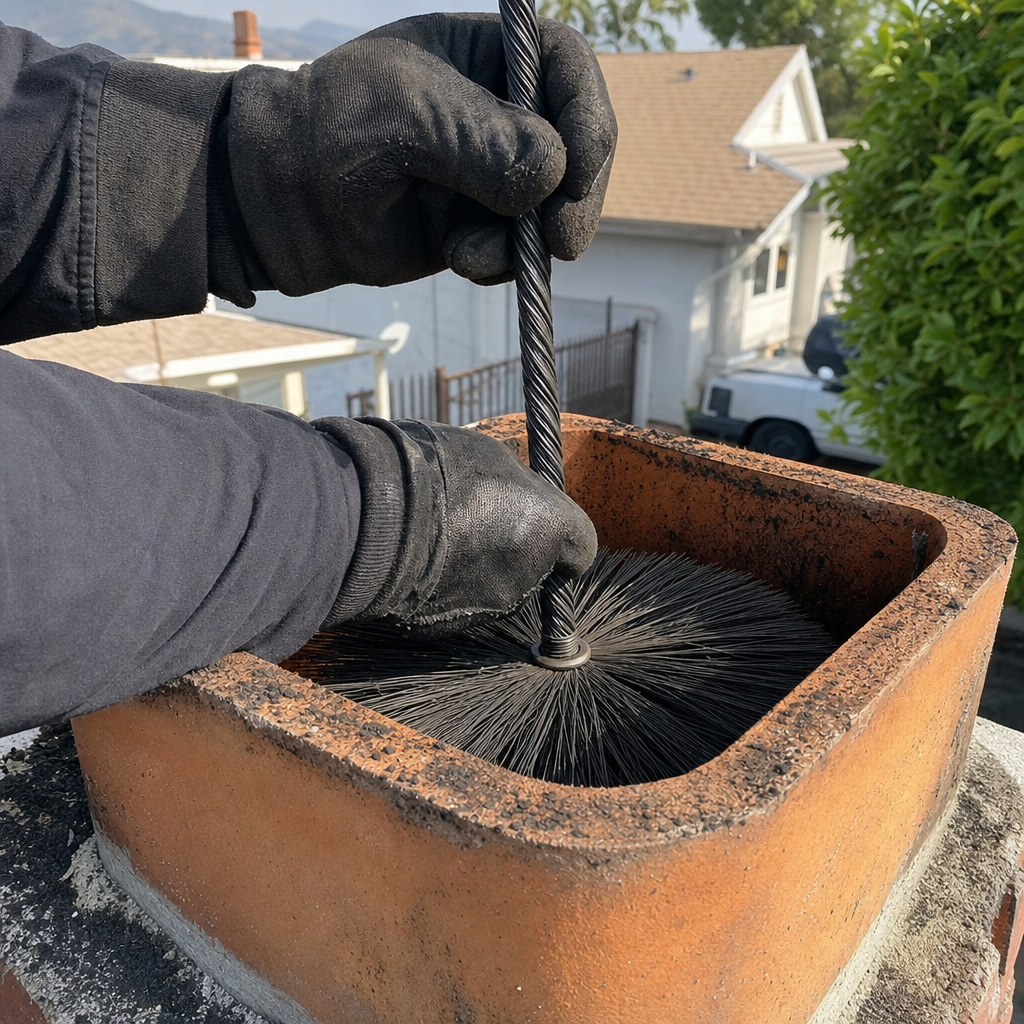
There is exactly one thing a homeowner can safely check: shine a flashlight up the flue from the firebox and look for obvious cracks, missing mortar, or debris. Do not attempt to measure, clean, or repair the flue liner yourself. The combustion zone is not forgiving, and a mismeasured sleeve that snags halfway down becomes an extraction job that costs more than proper installation. The top of a Los Angeles chimney is typically 20 to 35 feet up, on a roof baked brittle by sun, with a clay tile edge that will cut a glove.
We carry HeatShield-compatible materials on the truck, and most replacements are done in a single visit. Call (844) 803-1545 and we’ll send a technician with a camera, a measuring kit, and the right sleeve diameter. A square deal: no surprises on the bill.
FAQs
A properly installed HeatShield sleeve lasts 25 to 40 years in Southern California’s dry climate, longer than in freeze-thaw regions because thermal shock is the main killer. The original cerfractory resurfacing layer lasts 15 to 25 years depending on burn habits and whether the underlying clay was sound. Call (844) 803-1545 for a camera inspection if you’re unsure of your liner’s age.
Sometimes. If the original HeatShield coating is intact over 80% of the surface and the clay beneath has minor joint gaps, we can reapply cerfractory sealant. If the clay tiles are shifting, spalled, or the coating has delaminated, replacement is the only sound option. We document what we find with photos and give you a plain-English verdict.
Most HeatShield sleeve replacements take four to six hours from setup to final smoke test, assuming standard flue height and no masonry complications. We’ll be there when we say, and our background-checked, uniformed technicians complete most jobs in a single visit.
We stock 6″, 7″, and 8″ HeatShield-compatible sleeves and collars on our trucks for same-day installation in Los Angeles. Odd sizes or custom lengths require a one-day order, which we handle directly. Call (844) 803-1545 to confirm fitment and schedule.
Find what’s wrong, say it plainly, fix it right. That’s how Russell Haines trained our team, and it’s how we’ve worked across Los Angeles for over 12 years.
Written by Russell Haines, Owner & Master Sweep, Hearthstone Chimney Co. at Hearthstone Chimney Co., serving Los Angeles and nearby areas.