
DuraFlex Chimney Cleaning & Sweep in Los Angeles: A Homeowner’s Guide
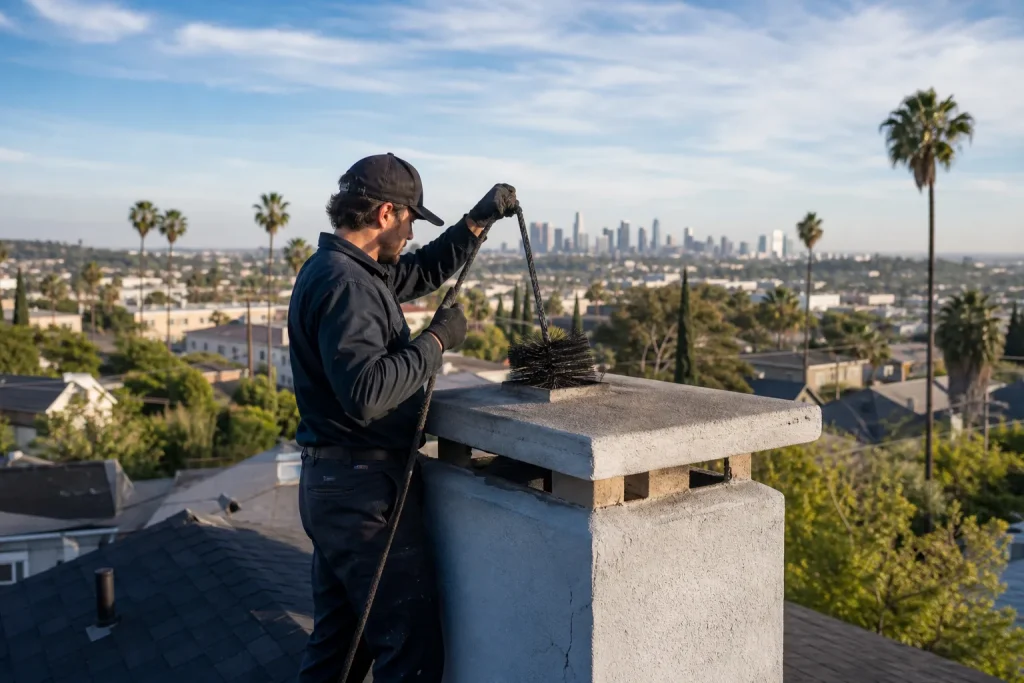
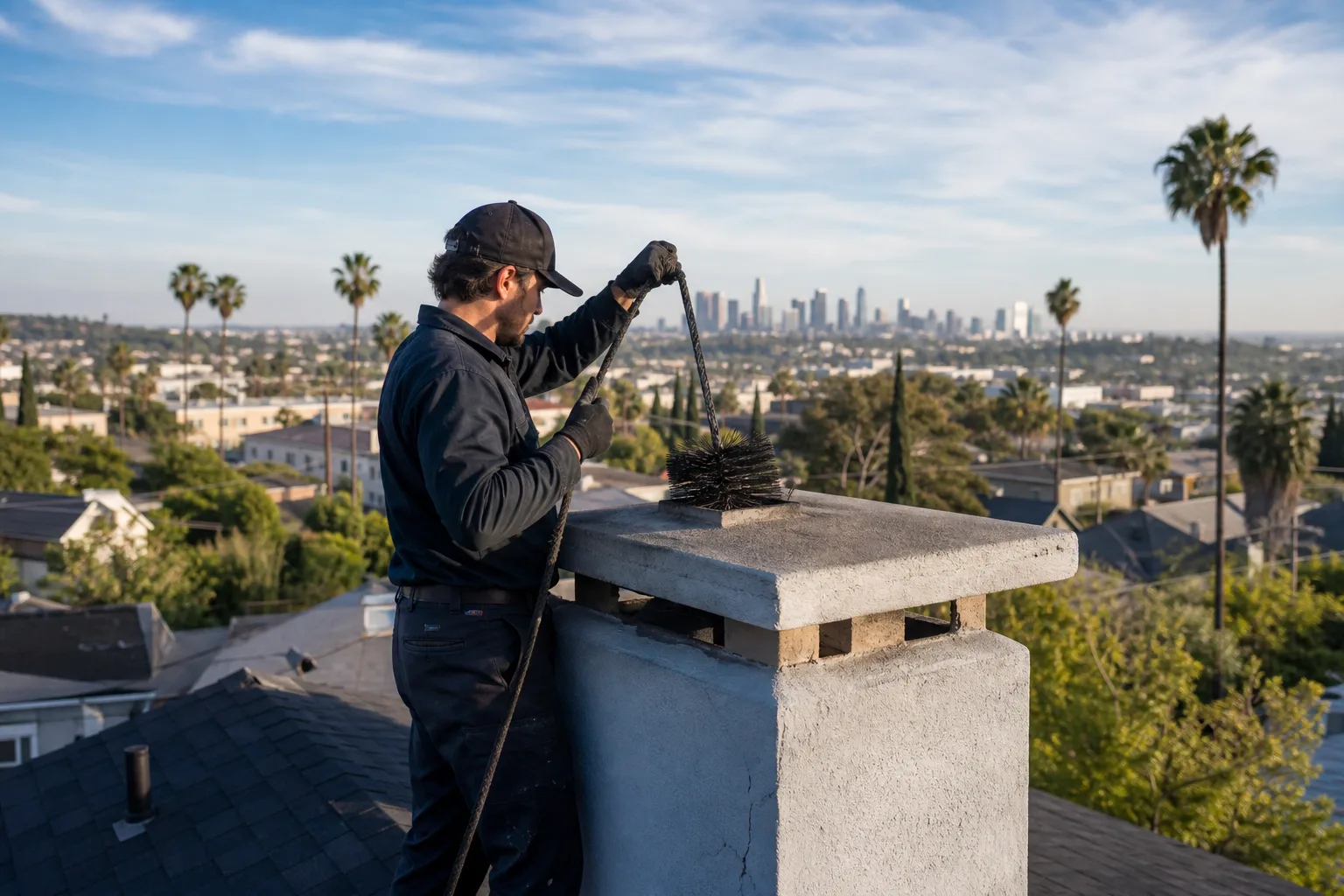
DuraFlex chimney cleaning in Los Angeles requires gentler tools and different techniques than standard flue sweeping, because the flexible stainless steel seams can be damaged by aggressive wire brushing. A proper DuraFlex cleaning uses soft-bristled poly brushes, low-RPM rotary systems, and inspection cameras to check seam integrity - methods that many general sweeps skip because they treat all metal liners the same. If you’d rather not worry about whether your sweep knows the difference, call Hearthstone Chimney Co. at (844) 803-1545 for a free estimate.
Last Tuesday we were in a 1926 Spanish Colonial over in Los Feliz where the homeowner had hired a cut-rate sweep three months prior. The guy ran a standard wire brush through their DuraFlex liner, left fine scratches along the seam welds, and never mentioned that the connector boot was separating from the flue collar. By the time we arrived, combustion gases were leaking into the wall cavity. The homeowner - a retired aerospace engineer, sharp as they come - had no idea because nobody told him DuraFlex demands a lighter touch. That story repeats across Los Angeles more often than it should.
What Is a DuraFlex Liner, and Why Is It Common in Los Angeles Homes?
DuraFlex is a flexible stainless steel chimney relining system manufactured by Olympia Chimney. It’s designed to be pulled down through an existing flue, conforming to offsets and bends that rigid liners cannot navigate. In Los Angeles, we see DuraFlex installations in two situations: older homes with damaged clay tile flues, and historic properties where the original chimney was built too narrow for modern appliance venting.
The housing stock in neighborhoods like Silver Lake, Echo Park, and Pasadena is full of chimneys from the 1920s through 1950s. Clay tile in these flues cracks from thermal cycling and earthquake settlement. Replacing the tile means tearing down and rebuilding the chimney - expensive, messy, and often impractical in tight LA lots. DuraFlex offers a working alternative: a new, code-compliant flue path without the masonry demolition.
But flexibility comes with trade-offs. The corrugated walls trap creosote differently than smooth rigid pipe. The seam welds, while strong, are stress points. And the liner’s thin-wall construction means aggressive cleaning tools can deform the corrugations or scratch through the passivation layer that protects against acid corrosion. Understanding these characteristics is the first step to maintaining one correctly.
Why Standard Wire Brushing Damages DuraFlex Liners
The most common mistake we encounter in Los Angeles is a sweep treating DuraFlex like clay tile or rigid stainless pipe. Standard chimney brushes use spring-loaded wire bristles designed to scrape hardened creosote from rough masonry surfaces. Run that tool through a DuraFlex liner and three things happen:
- The wire bristles catch in the corrugation valleys, potentially pulling the liner out of alignment at connection points
- The scraping action micro-scratches the stainless surface, creating initiation sites for acid-driven pitting corrosion
- The aggressive contact can work-harden the seam welds, making them brittle over repeated cleanings
We’ve pulled liners in Hollywood Hills homes where you could see the spiral pattern of wire brush damage under a borescope. The homeowner had paid for “annual maintenance” for six years. Each visit made the liner weaker. By year seven, the seams were leaking and the liner needed full replacement - a $3,800 job that proper cleaning might have delayed another decade.
The correct tool for DuraFlex is a poly-bristled or soft-nylon rotary brush, run at controlled RPM with adjustable torque. These brushes flex into the corrugations without digging into the metal. They remove glazed creosote through mechanical action and solvent application, not brute force scraping. The difference is the difference between brushing your teeth and scrubbing grout.
How to Verify Your Sweep Has DuraFlex Experience
Not every chimney sweep in Los Angeles has worked with flexible liner systems. Many are trained on traditional masonry flues and learned metal liner maintenance on the job without formal instruction. Before you hire, ask three specific questions:
- What brush material do you use on flexible stainless liners? The answer should be poly, nylon, or specifically “soft-bristled rotary.” If they say wire or steel, keep looking.
- Do you camera-inspect the seams after cleaning? A Level-2 inspection with a borescope should document seam condition, connector boot fit, and cap termination. Photos should be provided. At Hearthstone, we end every DuraFlex service with images the homeowner can see and a plain-English verdict on what we found.
- How many flexible liner systems have you serviced this year? You’re listening for specificity, not a vague “oh, plenty.” A qualified sweep knows the difference between DuraFlex, HeatShield applications, and rigid relining systems without pausing to think.
Los Angeles has no municipal licensing requirement for chimney sweeps, which means anyone with a brush and a truck can advertise the service. The Chimney Cleaning & Sweep in Los Angeles page on our site lists what proper certification looks like - CSIA credentials, membership in the National Chimney Sweep Guild, and documented continuing education on modern liner systems.
What Annual DuraFlex Inspection Should Include
NFPA 211 requires annual chimney inspection regardless of fuel type or liner material. For DuraFlex systems in Los Angeles, that inspection needs to go beyond surface-level soot checks. Here’s what we document on every DuraFlex service:
- Seam integrity along the full liner length: We run a camera from top to bottom, stopping at each corrugation to check for separation, rust staining, or deformation from previous improper cleaning
- Connector condition at the appliance: The flexible-to-rigid transition boot is the most failure-prone point. We check for heat cracking, loosening of the hose clamp assembly, and proper sealant application
- Cap fit and spark arrestor function: Los Angeles fire code requires spark arrestors in wildland-urban interface zones. The cap must fit the DuraFlex termination without gaps that admit water or vermin
- Creosote accumulation pattern: Uneven buildup indicates improper draft or liner sizing. We measure deposit thickness and note location - top third, middle, or concentrated at offsets
- Surrounding masonry condition: DuraFlex does not eliminate the need to monitor the original flue. Spalling tile above the liner top can fall and obstruct the termination
In our experience, Los Angeles homeowners who skip the camera inspection save $80 that year and spend $2,400 three years later. The camera takes twenty minutes. The math is not complicated.
When DuraFlex Liners Need Replacement, Not Just Cleaning
No liner lasts forever. DuraFlex carries a lifetime warranty when properly installed and maintained, but “lifetime” assumes correct fuel type, proper sizing, and appropriate cleaning. In Los Angeles, we see premature failure from three causes: improper original installation, aggressive cleaning damage, and coastal salt air corrosion in beach-adjacent neighborhoods like Venice and Playa del Rey.
Warning signs that cleaning is no longer sufficient:
- Rust-colored staining at seam welds, visible on camera inspection - indicates the passivation layer has failed
- Pinhole leaks in the corrugation valleys, detected with a smoke test - combustion gases migrating through the liner wall
- Liner sagging or pooling at offsets - the flexible material has lost structural memory and is collecting condensation
- Repeated connector boot failures - suggests liner movement from improper support spacing or thermal expansion damage
- Visible deformation from previous wire brush damage - scratches that have widened into channels
Replacement means pulling new DuraFlex or switching to a rigid stainless system if the flue geometry allows. The decision depends on chimney configuration, appliance type, and budget. We discuss all three factors openly and provide no-hassle upfront pricing - the number on the estimate is the number on the invoice.
When to call a pro: If your DuraFlex liner is more than ten years old and has never had a camera inspection, or if you’ve had any sweep use wire brushes in the past, schedule a Level-2 inspection before the next burning season. In Los Angeles, that season runs from November through March, and our calendar fills by October.
Related services in Los Angeles: If inspection reveals damage beyond the liner itself, our Chimney Repair in Los Angeles team handles masonry restoration, crown rebuilding, and waterproofing. For fireplace-facing issues, see Fireplace Services in Los Angeles.
The Bottom Line
DuraFlex liners solve real problems in Los Angeles’s older housing stock, but they demand maintenance that respects their flexible construction. Standard wire brushing damages the seams. Annual inspection without a camera misses deterioration. And sweeps without flexible-liner experience treat every flue the same - which is how a $200 cleaning becomes a $3,800 replacement.
Key takeaways for Los Angeles homeowners:
- Verify brush material before any DuraFlex cleaning - poly or nylon only, never wire
- Demand post-cleaning camera documentation with photos you can see
- Inspect annually, including seam integrity, connector condition, and cap fit
- Watch for rust staining, liner sag, and repeated connector failures as replacement warning signs
- Hire sweeps with documented flexible liner experience, not generalists who “do chimneys”
If you’re in Los Angeles and want your DuraFlex system cleaned and inspected by technicians who know the difference, Hearthstone Chimney Co. offers free estimates. We’ve served local communities for over 42 years, answer the phone with a live person 24 hours a day, and back every job with the 90-Day Done Right Promise - in writing, no arguing. Call (844) 803-1545 or visit our Hearthstone Chimney Co. home page to schedule.
Frequently Asked Questions
DuraFlex chimney cleaning in Los Angeles typically runs $280 to $450 for a standard single-flue system, depending on creosote buildup severity and whether the service includes a Level-2 camera inspection. Heavy glazed creosote or liner damage found during inspection may add $150 to $300 for solvent treatment or minor repair. Call (844) 803-1545 for an exact quote - estimates are free.
We don’t recommend it. Flexible stainless liners require specialized poly brushes, controlled-speed rotary equipment, and camera verification that most homeowners don’t own. More critically, improper technique voids the DuraFlex warranty and can create hidden damage that leads to carbon monoxide leakage. For safety and warranty protection, hire a sweep with documented DuraFlex experience.
NFPA 211 requires annual inspection for all chimney systems, and DuraFlex liners are no exception. In Los Angeles, where mild winters mean intermittent use, annual inspection prevents creosote accumulation from going unnoticed and catches coastal corrosion or seismic damage early. We recommend scheduling before October, before the burning season begins.
DuraFlex is better for chimneys with offsets, bends, or tight flue dimensions that rigid pipe cannot navigate - common in 1920s to 1950s Los Angeles homes. Rigid stainless offers slightly better draft and easier cleaning, but only if the flue is straight. The right choice depends on your chimney’s geometry, which a Level-2 inspection can determine. Hearthstone technicians assess both options and recommend based on what your specific flue requires, not what we prefer to install.
Written by the team at Hearthstone Chimney Co., serving Los Angeles since 2014.
Need Chimney Cleaning Help?
Call Hearthstone Chimney Co. - licensed & insured, available 24/7 in Los Angeles.
(844) 803-1545