
Copperfield Chimney Cleaning & Sweep in Los Angeles: A Homeowner’s Guide
Copperfield chimney equipment in Los Angeles runs from basic polypropylene brushes to powered rotary systems built for glazed creosote removal. The same brand name on the truck means nothing if the technician doesn’t match the tool to your flue material, creosote stage, and liner type. We’ve seen $400 “cleanings” in Hancock Park that barely touched third-stage glaze because the sweep brought a standard brush to a clay flue with baked-on residue.
If you’d rather not sort through equipment lists yourself, our chimney cleaning team in Los Angeles carries the full Copperfield line and selects tools based on what your inspection actually shows. Call (844) 803-1545 for a free estimate.
What Copperfield Equipment Actually Includes
Copperfield isn’t a single tool. It’s a professional product line with specific jobs built into each piece, and knowing the difference protects you from a sweep who shows up with one brush for every situation.
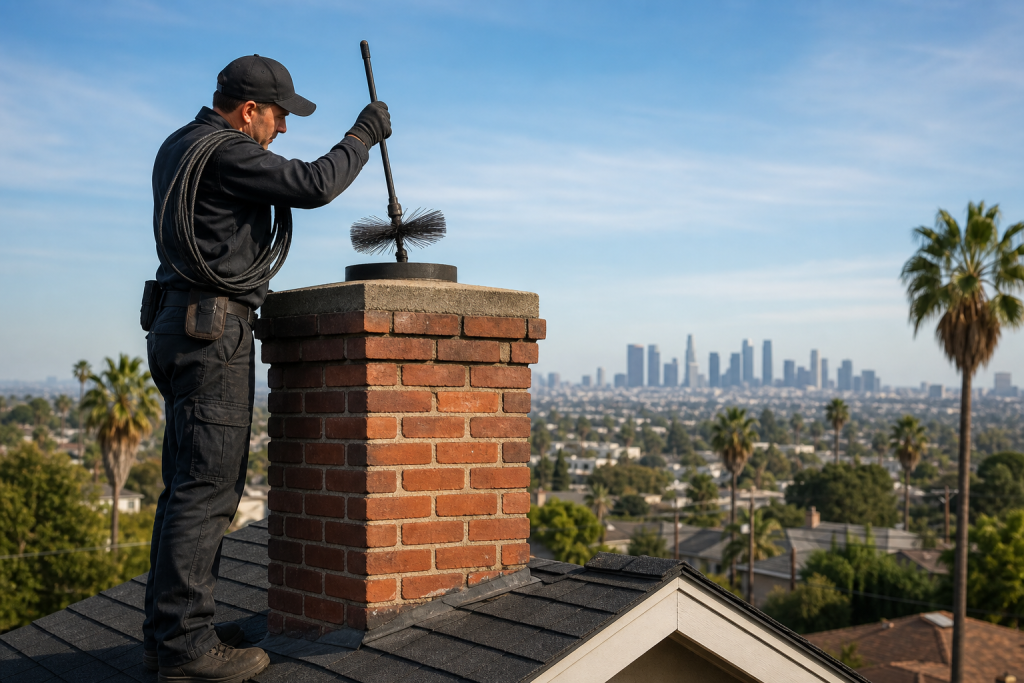
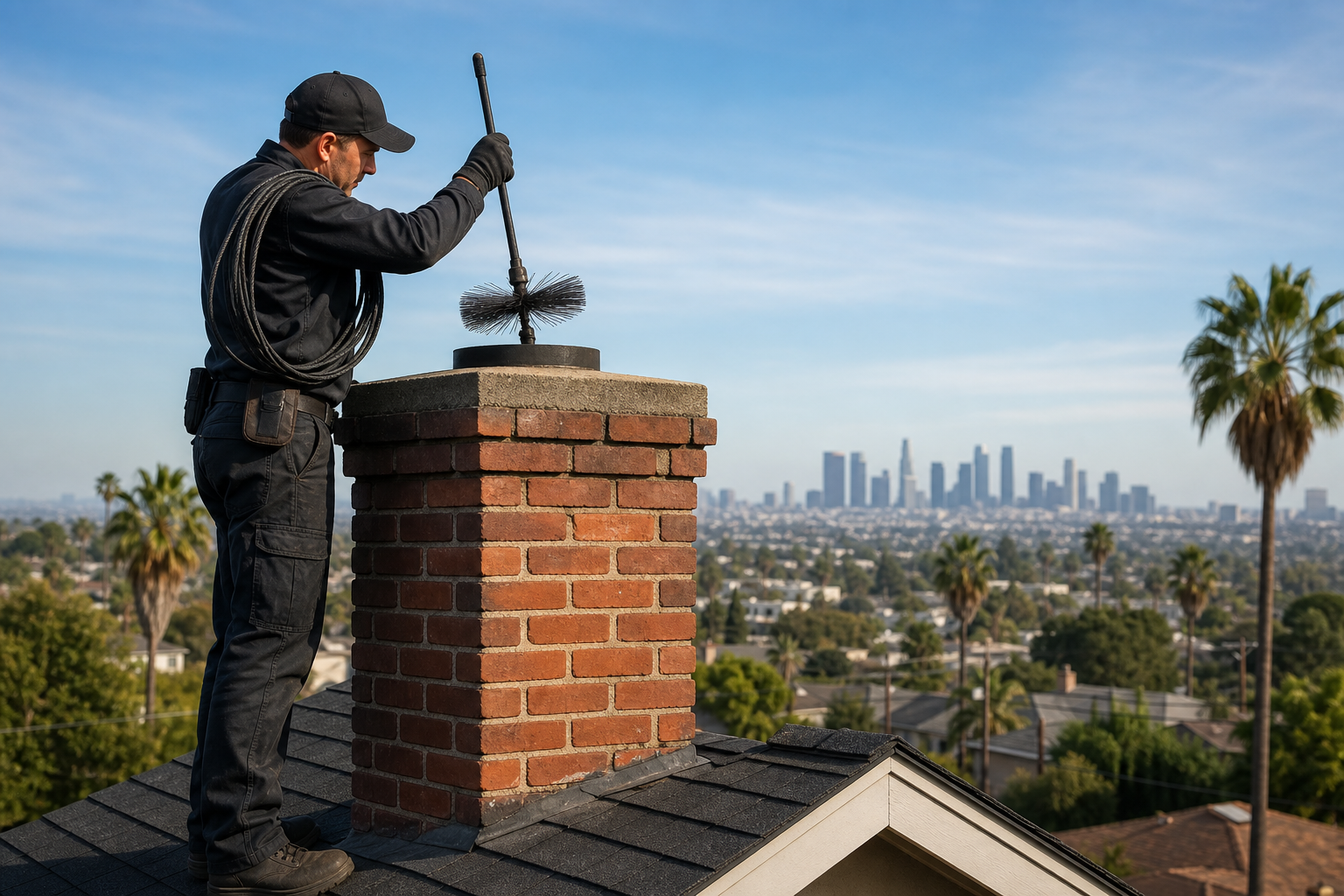
Rods and brushes. Copperfield’s standard polypropylene brushes work for routine maintenance on sound masonry flues with light soot. The whip-style designs flex through offsets better than rigid alternatives, but they won’t touch glazed creosote. For metal liners, Copperfield makes softer-bristle versions that clean without scoring stainless steel.
Powered rotary systems. Here’s where Copperfield separates routine sweeps from serious operators. The rotary systems use a drill-driven cable with interchangeable heads, rubber whips for stage-one creosote, chain flails for stage-two, and specialized cutters for stage-three glaze. Each head spins at a specific RPM range. Run a chain flail too fast in a clay flue and you risk spalling the liner. Too slow in a metal liner and you’ll polish the creosote instead of removing it.
Vacuum and containment. Copperfield’s HEPA vacuums matter in Los Angeles homes where HVAC systems recirculate air constantly. A sweep without proper negative air pressure will leave fine soot in your living space for weeks.
We stock DuraFlex, HeatShield, and Copperfield equipment because each brand solves different problems. A technician who carries one brand exclusively is usually cutting corners on selection.
What happens when you call
- 1
A real person answersNo phone trees - you reach a local pro.
- 2
You get an upfront price rangeHonest numbers before anyone is dispatched.
- 3
A background-checked tech heads outLicensed & insured, dispatched right away.
- 4
You approve before work beginsNothing starts until you say go.
Why the Same Copperfield Tools Produce Different Results
The tool is only half the equation. In our 42 years, we’ve watched competent equipment fail because the operator skipped three steps that matter more than the brand name.
Flue material determines speed and attachment. Clay tile flues in Los Angeles’s 1920s Spanish Revival homes need lower RPM and softer contact pressure than the stainless steel liners we install in newer construction around Studio City. A chain flail at full speed in aged clay tile will crack it. We’ve replaced flues in Los Feliz where exactly this happened.
Creosote stage determines chemistry and mechanics. Stage-one creosote, fluffy and light, brushes off. Stage-three glaze, shiny and baked-on, needs chemical pretreatment plus mechanical removal. Copperfield makes a creosote modifier for this, but applying it requires a cool flue and dwell time. A sweep in a hurry won’t bother.
Inspection before cleaning prevents disasters. We won’t run any powered equipment until our Level-2 camera inspection shows us the flue’s condition. Last month in Pasadena, we found a cracked middle flue tile that would have shattered under rotary contact. We repaired it first, then cleaned. A sweep who cleans first and inspects later, or never, risks turning a maintenance visit into a rebuild.
The difference between a $200 cleaning and a $200 cleaning that actually protects your home is rarely the equipment. It’s the judgment of the person holding it.
How to Ask a Sweep What They’re Actually Bringing
Most Los Angeles homeowners don’t know what questions separate prepared technicians from brand-name carriers. These four questions will tell you everything.
- “What creosote stage do you expect, and what’s your plan if it’s glazed?” A prepared sweep explains their inspection process and which Copperfield attachments they carry for each stage. A unprepared one says they’ll “see when they get there.”
- “What’s my flue material, and which brush type matches it?” If they don’t know or don’t ask, they haven’t looked at your system. Clay, metal, and cast-in-place liners each need different approaches.
- “Do you document with photos before and after?” We provide dated photos with every job. If a sweep won’t show you what they found and what changed, you have no proof the work happened.
- “What’s your containment setup for fine particulate?” In Los Angeles’s tight building envelopes, soot migration is a real problem. HEPA vacuum with negative air pressure is the minimum.
A sweep who gets irritated by these questions is a sweep with something to hide. The good ones appreciate homeowners who care enough to ask.
Brand Signal Versus Actual Tool Selection
We’ve noticed two types of sweeps carrying Copperfield in Los Angeles. One stocks the full product range and selects based on your specific system. The other bought a starter kit for the logo on the van.
The brand-signal sweep typically carries one rotary head, one brush size, and works fast. They’ll clean your flue adequately if it’s standard construction with light soot. Bring them a pre-1940 masonry chimney with multiple offsets and baked glaze, and you’ll get a surface cleaning that leaves the hazard in place.
The tool-selecting sweep asks about your chimney’s age, liner type, last cleaning date, and burning habits before loading the truck. They may bring four attachments and use two, or they may find your system needs repair before cleaning is safe. Either way, the job matches the house.
At Hearthstone Chimney Co., we document every inspection with photos and a plain-English verdict because we want you to see why we selected specific tools. No secrets, no assumptions. A square deal.
What Post-Cleaning Inspection Should Show You
Equipment brand fades in importance next to proof of work performed. After any cleaning in Los Angeles, you should receive documentation that answers three questions without you having to climb the roof yourself.
Before-and-after photos of the flue interior. The camera doesn’t lie. A clean flue shows uniform masonry or metal surface with no remaining creosote deposits. We use our Level-2 inspection system for this, and we store the images with your service record.
Written condition assessment. Photos without interpretation leave you guessing. Our verdicts specify what we found, what we did, and what we’ll monitor next visit. If we spot deterioration that doesn’t need immediate repair, we note it with a timeline for re-evaluation.
Combustion clearance verification. For wood-burning systems, this means confirming no debris obstructs the flue and clearances to combustibles remain intact. For gas inserts, we verify proper venting and draft performance.
Whether we used Copperfield, Olympia Chimney, or Famco equipment matters less than whether you can see the result and understand what it means for your safety. The brand is a means. The documentation is the proof.
When to Call a Professional in Los Angeles
Annual cleaning by a certified sweep prevents creosote buildup from reaching dangerous levels. Call sooner if you notice smoke entering the room, a strong tar odor, visible soot around the fireplace opening, or if it’s been over two years since your last professional service. In Los Angeles’s mild winters, many homeowners forget their chimney entirely until cold weather hits and the system fails under first use.
Chimney repair in Los Angeles and fireplace services in Los Angeles are related services you may need if inspection reveals damage that cleaning alone won’t address.
Key Takeaways
- Copperfield makes equipment for specific flue types and creosote stages, not universal application
- Rotary systems require correct speed and attachment selection for clay versus metal liners
- Ask prospective sweeps about their inspection process, tool selection logic, and documentation before hiring
- Photos and written verdicts matter more than equipment brand names for proving work quality
- Los Angeles’s varied housing stock, from 1920s masonry to modern metal liners, demands adaptable expertise
The Bottom Line
Copperfield chimney equipment is professional-grade when used by professionals who understand it. The brand on the brush matters far less than the judgment of the person running it, the inspection that precedes the work, and the documentation that proves what happened inside your flue.
We’ve served Los Angeles homeowners for over 42 years with background-checked, uniformed technicians who complete most jobs in a single visit. Our 90-Day Done Right Promise covers every job in writing with no arguing. If you’re in Los Angeles and want a sweep who selects tools based on your actual chimney, not a standard kit, call (844) 803-1545 for a free estimate. We’ll be there when we say.
Frequently Asked Questions
Professional chimney cleaning in Los Angeles typically ranges from $180 to $350 for standard maintenance, with glazed creosote removal or multi-flue systems running higher. The price depends on creosote stage, flue accessibility, and whether repairs are needed before cleaning. Call (844) 803-1545 for an exact quote on your system. Estimates are free.
Copperfield, Gelco, Olympia Chimney, and Famco each excel in specific applications. Copperfield’s rotary systems are particularly effective for glazed creosote, but the technician’s training in selecting and operating the equipment matters more than any brand preference. A skilled sweep with basic tools outperforms an unskilled operator with premium equipment.
Annual inspection by a certified sweep determines whether cleaning suffices or repair is needed. Warning signs include smoke backup, tar odors, visible cracks in masonry, or water staining. In Los Angeles’s earthquake-prone environment, structural damage from settling is common and requires repair before safe operation. We document everything with photos so you can see the difference.
Basic brush cleaning of a straight, accessible flue with light soot is possible for handy homeowners, but we don’t recommend it. Roof work on Los Angeles’s varied pitches is genuinely dangerous, and improper rotary tool use can damage clay flue tiles or metal liners. For stage-two or stage-three creosote, professional cleaning with proper containment and inspection is the safer choice. We’re licensed, insured, and background-checked for this reason.
Written by the team at Hearthstone Chimney Co., serving Los Angeles since 2014.
Need Chimney Cleaning Help?
Call Hearthstone Chimney Co. - licensed & insured, available 24/7 in Los Angeles.
(844) 803-1545