
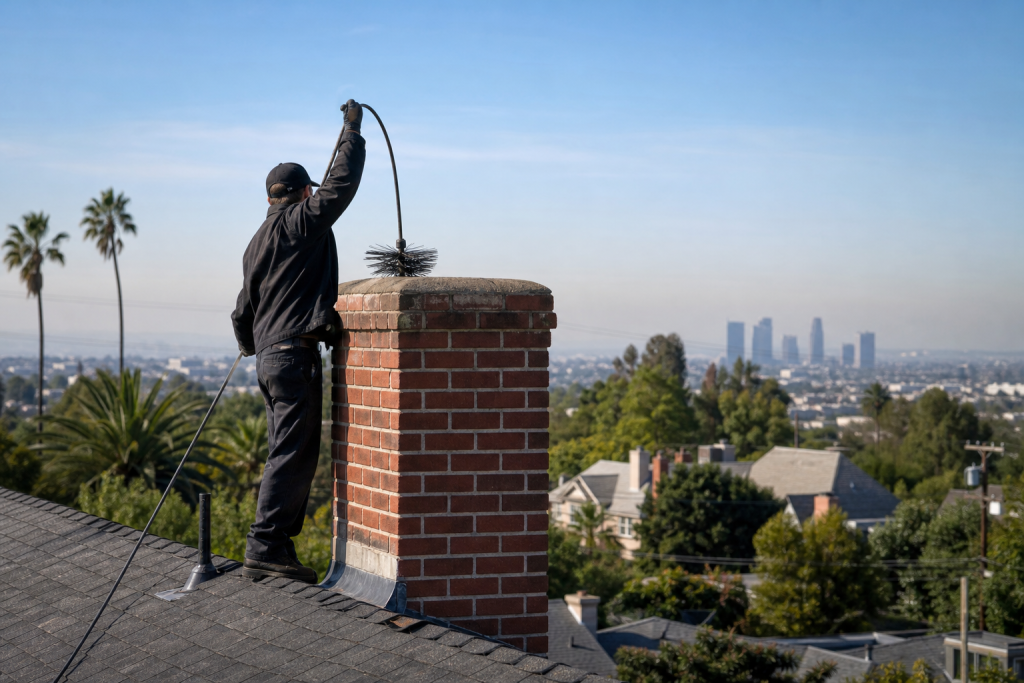
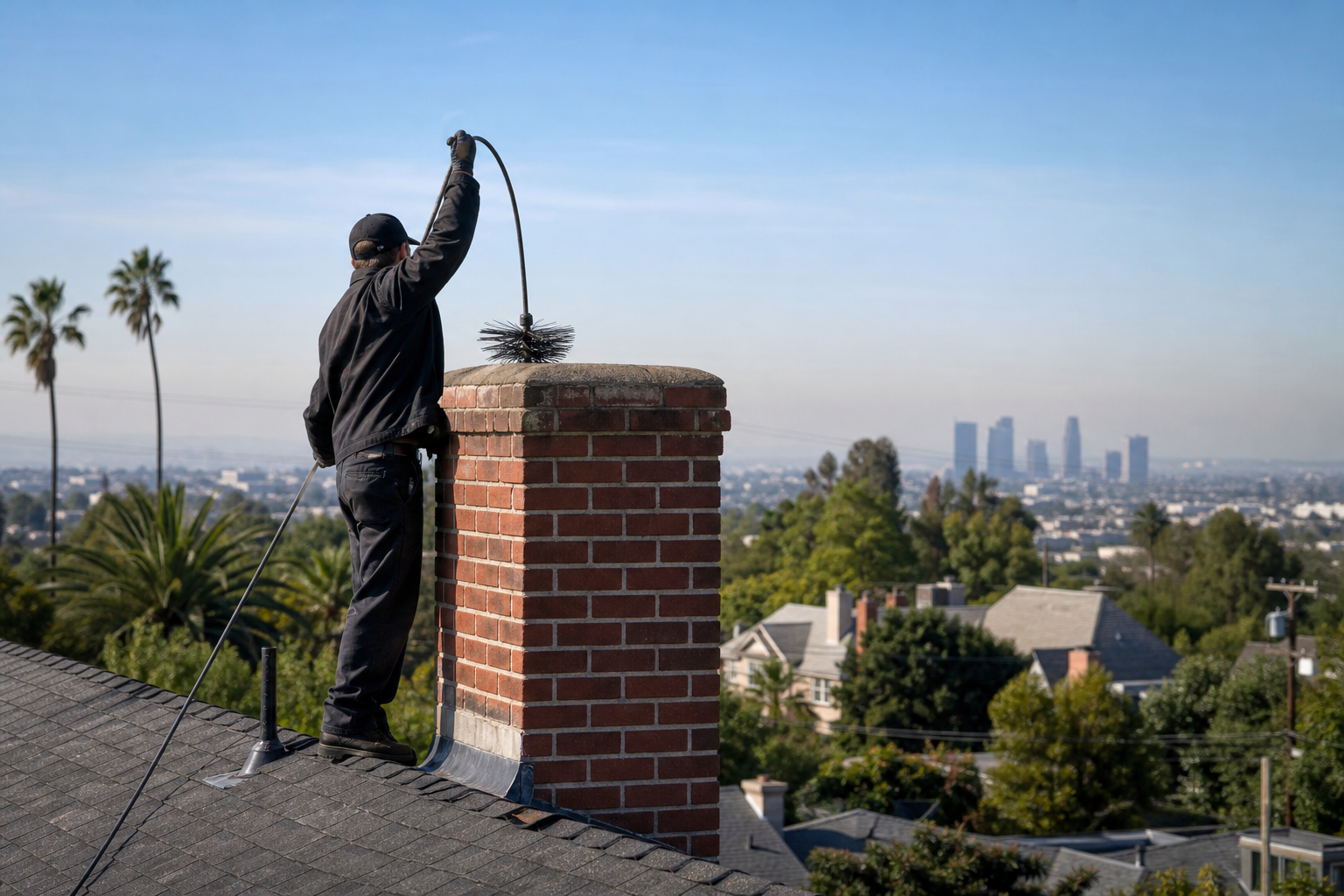
Top Signs You Need Chimney Cleaning Service - Don’t Ignore These
The most dangerous chimney in Los Angeles isn’t one that smokes badly. It’s one that drafts perfectly while a stage-three creosote glaze lines the upper flue, invisible from the firebox, waiting for the right temperature. If your fireplace seems to work fine but you haven’t had a professional inspection in over a year, you may be operating a system that’s already unsafe. For homeowners who’d rather not guess, our chimney cleaning team in Los Angeles offers documented camera inspections with photos you can see and a plain-English verdict. Call (844) 803-1545.
What Creosote Really Looks Like - And Why the Stage Matters
Most homeowners think creosote is a light, brushable soot. In our 42 years, we’ve found that’s rarely the case in Los Angeles chimneys that burn manufactured logs or sit unused for months between fires.
Creosote builds in three distinct stages, and only one is obvious to the untrained eye:
- Stage one: A light, flaky, charcoal-colored deposit. You can sometimes spot this yourself with a flashlight at the damper. It brushes off easily during a standard sweep.
- Stage two: A harder, tar-like layer that looks like shiny black corn flakes. This requires a rotary whip or chains to remove. You won’t see it from below - it forms in the mid-to-upper flue where temperatures drop and condensation collects.
- Stage three: A glazed, hardened coating that resembles obsidian or hardened syrup. This is the fuel for chimney fires. It can exceed 1/8 inch thickness and requires chemical treatment before mechanical removal. From the firebox, the flue may look merely “dark.”
Here’s the critical point: stage-three glaze is nearly always invisible to a homeowner standing at the hearth. We’ve inspected chimneys in Hancock Park and Pasadena where the firebox looked spotless and the upper flue was coated with a quarter-inch of glazed creosote. That’s why we document every chimney cleaning in Los Angeles with level-2 camera inspection - photos you can see, a plain-English verdict.
If you burn more than two cords of wood per season, or if you use manufactured logs (which burn cooler and produce more condensable vapors), assume your flue needs professional evaluation regardless of what you can see.
The Summer Odor That Means Your Chimney Is Dirty
Los Angeles heat does something specific to dirty chimneys. When temperatures climb above 85 degrees and humidity rises, creosote deposits begin to off-gas a distinct tarry, petroleum-like odor. Homeowners often describe it as “asphalt,” “road tar,” or “old diesel.” It seeps through the damper, into the firebox, and from there into the living space.
This smell is not normal. It does not mean your chimney is “settling” or “breathing.” It means hydrocarbon deposits are reacting to heat and humidity - and that reaction produces acidic vapors that deteriorate metal liners and mortar joints.
We get calls every July from homeowners in Silver Lake and the San Fernando Valley who haven’t lit a fire since February. They assume a dead animal or plumbing issue. Nine times out of ten, it’s stage-two or stage-three creosote activated by summer heat. The chimney doesn’t care whether you’re burning; the chemistry proceeds regardless.
If you detect this odor, your chimney needs cleaning before the next burn season. Waiting until October puts you behind every other homeowner who just remembered their fireplace exists.
One Visual Clue You Can Check Yourself
There is exactly one reliable visual indicator a homeowner can spot without specialized equipment. It requires a flashlight and about thirty seconds of attention.
Open your damper fully. Shine a flashlight up the flue at a slight angle - not straight up, which just reflects glare back at you. Look for a glossy, reflective black surface. Not matte soot. Not gray ash. A sheen, like wet paint or obsidian. That glaze indicates stage-two or stage-three creosote, and it means the chimney is unsafe to use until professionally cleaned.
What you cannot assess from this position: the thickness of the deposit, whether it extends the full flue length, whether your liner has sustained heat damage beneath it, or whether the smoke chamber above the damper has parallel buildup. Those require a level-2 camera inspection, which is why we include it with every chimney cleaning service in Los Angeles.
We pulled a job last month in Los Feliz where the homeowner had checked the flue herself, seen only “darkness,” and assumed all was well. The camera revealed a glazed constriction reducing her flue diameter by nearly 40 percent. She’d been operating what amounted to a partially blocked chimney for two winters.
When Allergies Point to Chimney Problems, Not Pollen
Los Angeles allergy sufferers blame jacaranda blooms, Santa Ana winds, and dusty canyon air. Sometimes the culprit is the chimney.
Deteriorating liner integrity - cracks in clay tile, gaps in stainless steel, or corrosion in older aluminum liners - allows combustion byproducts, exterior moisture, and attic air to migrate into living spaces. The symptoms mimic seasonal allergies: irritated sinuses, persistent cough, headaches that improve when you leave the house.
The mechanism is straightforward. A compromised liner can’t maintain the pressure boundary between flue gases and indoor air. In summer, when the chimney is cooler, reverse drafting can pull attic dust and insulation particles down through gaps. In winter, micro-leaks release nitrogen dioxide and carbon monoxide at levels that may not trigger detectors but cause chronic low-grade symptoms.
We’ve replaced liners in homes from Brentwood to Alhambra where the homeowners had spent two years and considerable money on air purifiers, duct cleaning, and allergist visits. The real issue was a cracked clay tile liner, visible only by camera, allowing a slow exchange between flue and room air. After installing a DuraFlex stainless steel liner with proper insulation and a sealed top plate, the symptoms resolved within weeks.
If your allergy patterns don’t track with pollen counts, or if they’re worse on windy days when pressure differentials are strongest, your chimney liner integrity deserves investigation.
Exterior Damage That Signals Interior Trouble
The outside of your chimney tells a story about the inside. In Los Angeles, where seismic activity, marine layer moisture, and thermal cycling converge, exterior deterioration often precedes the problems that make chimneys unsafe to use.
Look for these three signs during daylight, from ground level:
- Spalling brick: Surface flaking or chipping that exposes the softer inner body of the brick. This occurs when moisture penetrates the masonry, freezes (yes, even in Los Angeles - we get below-freezing nights in the valleys), and expands. Spalling accelerates dramatically once it starts, and it indicates water is already moving through the chimney structure.
- Efflorescence: A white, powdery deposit on the brick surface. It’s salt crystallization from water evaporating through the masonry. Efflorescence means water is entering the chimney system, dissolving soluble minerals, and carrying them to the surface. The water is coming from somewhere - failed crown, deteriorated mortar, or compromised flashing - and it’s degrading everything it touches inside.
- Mortar gaps at the crown: The crown is the concrete cap that seals the chimney top. Hairline cracks are normal; gaps you can fit a coin into are not. Crown failure allows direct water entry onto the smoke chamber and flue liner, where it mixes with creosote to form sulfuric acid that eats clay tile and corrodes metal.
Water infiltration doesn’t just damage masonry. It degrades creosote deposits, making them more acidic and more adhesive. A wet dirty chimney is significantly more hazardous than a dry dirty one. When we perform chimney repair in Los Angeles, we often find that exterior water entry has compounded interior cleaning needs by a factor of two or three.
Materials matter here. We rebuild crowns with HeatShield crown sealant and install Gelco chimney caps with proper drip edges and screen mesh - not the hardware-store versions that rust through in three years. Done right, and we stand behind it.
When to Call a Professional
If you’ve detected any of the signs above - glazed creosote sheen, summer tar odor, unexplained allergy symptoms, or exterior masonry damage - your chimney has crossed from “overdue for maintenance” to “needs professional evaluation before next use.” This is not a judgment on your housekeeping. It’s the physics of combustion in a confined flue.
Our process is straightforward. A live person answers when you call (844) 803-1545, any hour, any day. We schedule a level-2 inspection with camera documentation. You receive photos, a plain-English verdict, and no-hassle upfront pricing. Most chimney cleanings in Los Angeles are completed in a single visit. If repair is needed, the estimate is the invoice - a square deal, no surprises on the bill.
Related services: Fireplace Services in Los Angeles | Chimney Repair in Los Angeles
The Bottom Line
The chimneys that cause house fires rarely announce themselves with dramatic smoke or visible flame. They operate quietly, drafting adequately, while hidden deposits and deteriorating liners accumulate risk. The signs that matter - creosote glaze, summer odor, liner micro-leaks, exterior water damage - require attention that goes beyond what a homeowner can assess from the hearth.
Key takeaways:
- Stage-three creosote is nearly always invisible from the firebox; a flashlight at the damper reveals only the earliest stages
- A tarry, petroleum-like odor in summer heat means hydrocarbon deposits are actively degrading your flue
- Glossy black sheen in the flue, not matte soot, signals urgent professional cleaning
- Chronic indoor allergy symptoms that don’t track with pollen may indicate liner compromise
- Spalling brick, efflorescence, and crown gaps are exterior warnings of interior water damage and accelerated creosote corrosion
If you’re in Los Angeles and recognize any of these signs, Hearthstone Chimney Co. offers documented inspections and free estimates. We’ve served local communities for over 42 years, and we plan to be here when your chimney needs attention again. Call (844) 803-1545. A live person will answer.
Frequently Asked Questions
The National Fire Protection Association recommends annual inspection, with cleaning as needed based on creosote accumulation. In Los Angeles, where many homeowners burn manufactured logs or use fireplaces intermittently, we find that “as needed” typically means every 1 to 2 years for active fireplaces, and every 2 to 3 years for decorative or occasional use - but only if confirmed by camera inspection. Manufactured logs produce more condensable vapors per BTU than seasoned hardwood, so “I only burn Duraflame” is not a reason to skip inspection. Call (844) 803-1545 to schedule - estimates are free.
Stage-one soot removal is physically possible for a motivated homeowner with proper brushes, rods, and rooftop access. Stage-two and stage-three deposits are not. Rotary whips, chains, and chemical treatments require training, and working on a Los Angeles roof - often steep, often tile, often with seismic bracing obstacles - presents genuine fall risk. More critically, without a level-2 camera inspection, you cannot verify that the flue is actually clean or that the liner is intact. We don’t recommend DIY for anything beyond light firebox ash removal. For a documented, guaranteed cleaning, call (844) 803-1545.
A sweep removes deposits from the flue, smoke chamber, and firebox. An inspection evaluates the system’s condition, including liner integrity, clearances, and structural soundness. At Hearthstone, we do not perform a sweep without inspection - it would be like changing your oil without checking the filter. Our level-2 inspection includes interior camera documentation, photos you can see, and a plain-English verdict. In writing, no arguing. If you’re unsure what your chimney needs, call (844) 803-1545 for a free estimate.
Standard chimney cleaning with level-2 camera inspection typically ranges from $199 to $349 in the Los Angeles market, depending on accessibility, flue configuration, and creosote stage. Stage-three glazed deposits requiring chemical pretreatment add $75 to $150. We provide no-hassle upfront pricing before any work begins - the number on the estimate is the number on the invoice. Senior and veteran discounts of 5% apply. For an exact quote on your specific chimney, call (844) 803-1545. Estimates are free, and a live person answers every call.
Written by the team at Hearthstone Chimney Co., serving Los Angeles since 2014.
Need Chimney Cleaning Help?
Call Hearthstone Chimney Co. - licensed & insured, available 24/7 in Los Angeles.
(844) 803-1545